
Most used car advice arrives as a long undifferentiated list, which is exactly the wrong shape for the job. You do not need forty things to remember. You need to know what to do at each stage and which checks are genuinely worth your time.
What follows is organised the way an inspection actually happens, and it ends with the part most buyers skip.
Before you go
The work that saves the most time happens before you leave the house.
Check the vehicle on the Personal Property Securities Register. This reveals whether money is owed against the car, which matters because a vehicle with finance outstanding can in some circumstances be repossessed from a new owner. The register also indicates whether a vehicle has been recorded as written off or stolen. It is the single highest-value check available to a private buyer.
Look up the registration status and expiry with the relevant state road authority, and check the written-off vehicle register for your state.
Then look at comparable listings. Five minutes establishes what the car is actually worth, which turns a negotiation into a conversation about facts rather than feelings. This is the cheapest part of buying a used car well, and the most frequently skipped.
Finally, ask the seller questions in writing before you travel. Why are they selling, how long have they owned it, is the service history complete, has it been in an accident. The answers matter, and so does whether they answer at all.
At the car
Arrive in daylight and when it is dry. Both conceal less than the alternatives.
Walk the full perimeter, looking along the panels rather than straight at them, which is how you see ripples, filler and mismatched paint. Check that panel gaps are even and consistent. Look at the tyres, including the spare, and check whether wear is even across each tyre and matched between them, because uneven wear suggests alignment or suspension issues.
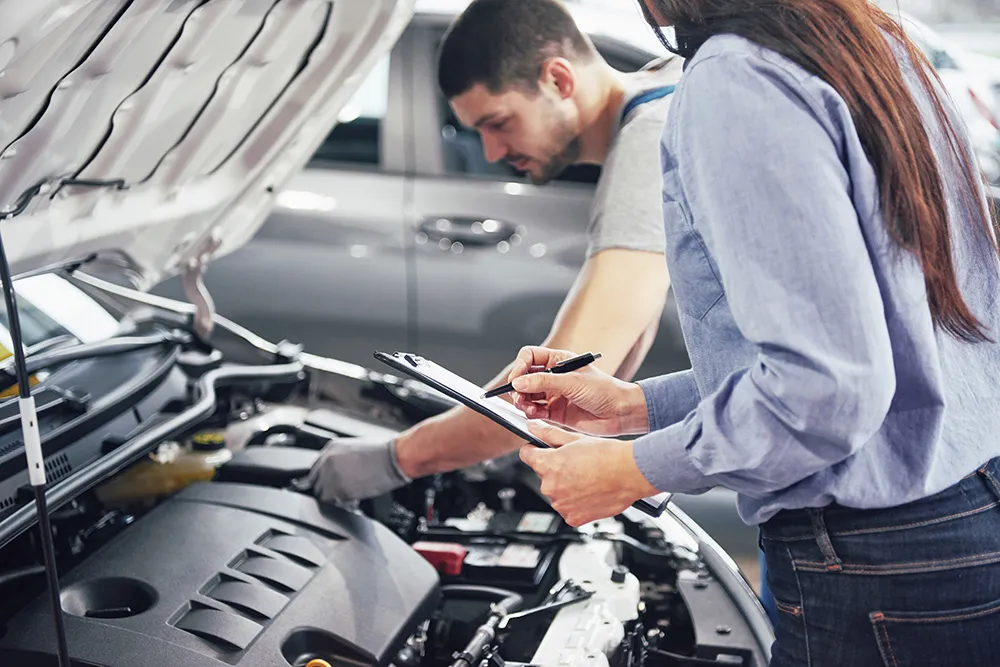
Open and close every door, the bonnet and the boot. Look under the bonnet for leaks, corrosion and anything obviously newer than its surroundings. Check the oil and coolant levels and condition.
Inside, look for wear that matches the kilometres. A heavily worn driver's seat, steering wheel and pedals on a low-kilometre car is a reason to ask more questions. Test every electrical function: windows, locks, lights, air conditioning, the infotainment system, and every seat adjustment.
On the drive
Insist on a test drive, and make it long enough to be useful. Ten minutes is not.
Drive at a range of speeds, including highway speed if you can. Listen with the radio off. You are checking that the engine starts cleanly and idles evenly, that the transmission shifts smoothly without hesitation or shunting, that the brakes pull up straight without pulsing, and that the steering tracks straight without vibration.
Find a quiet place to test the steering at full lock in both directions, and reverse in a straight line while listening. Both reveal things a gentle drive around the block will not.
Before you pay
Here is the step most buyers skip, and it is the one that matters most.
Get an independent pre-purchase inspection. A qualified mechanic who has no interest in the sale will find things you will not, and the cost is small against the price of the car. If a seller resists an inspection, treat that as information.
Then check the paperwork properly. The seller's identification should match the name on the registration papers. The VIN on the car should match the VIN on the documents. The service history should be present and consistent with the kilometres shown.
When buying a used car privately, confirm how the transfer of registration works in your state and who is responsible for which part of it, because the process differs.
What this is really for
Every check above does the same job: it reduces the number of things you are taking on trust.
You will not eliminate all of them, and you do not need to. A used car is a used car and some uncertainty is the nature of the transaction. The aim is to know what you are buying well enough to price it correctly and to walk away from the ones that do not add up.
The other thing worth saying is that buying a used car from a dealer changes the risk profile, because a licensed seller carries obligations a private seller does not. That protection is part of what the price reflects.
A simpler route
Cars4Us presents every vehicle with its details and history documented up front, which removes much of the uncertainty this checklist exists to manage. You can still run every check above, and we would encourage it.
If you are selling rather than buying a used car, we buy directly too. Get a free valuation online, or browse the current range and ask our team anything about a specific vehicle.